
Place / Lugar: Shinjuku, Tokyo
Date / Fecha: 2016
Use / Uso: cemetery
Surface / Superficie: –
Author / Autor: José Ignacio Rejas
Collaborators / Colaboradores: –
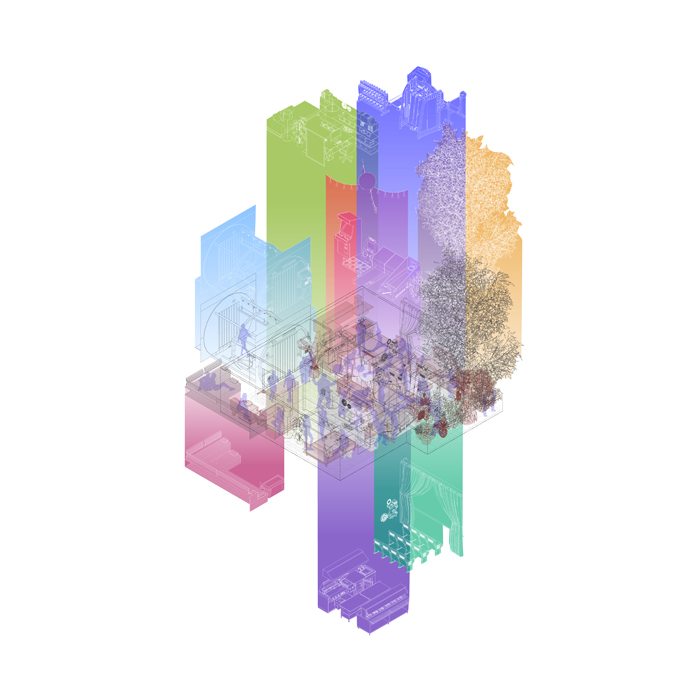
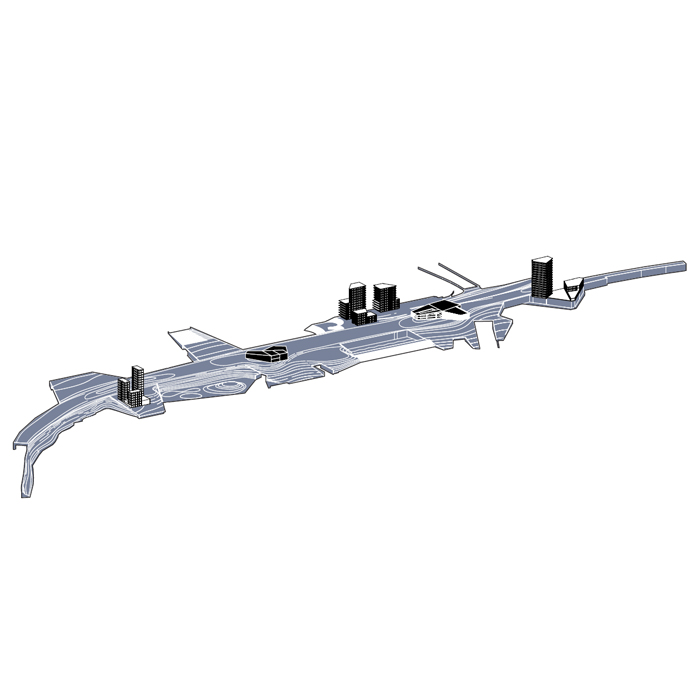
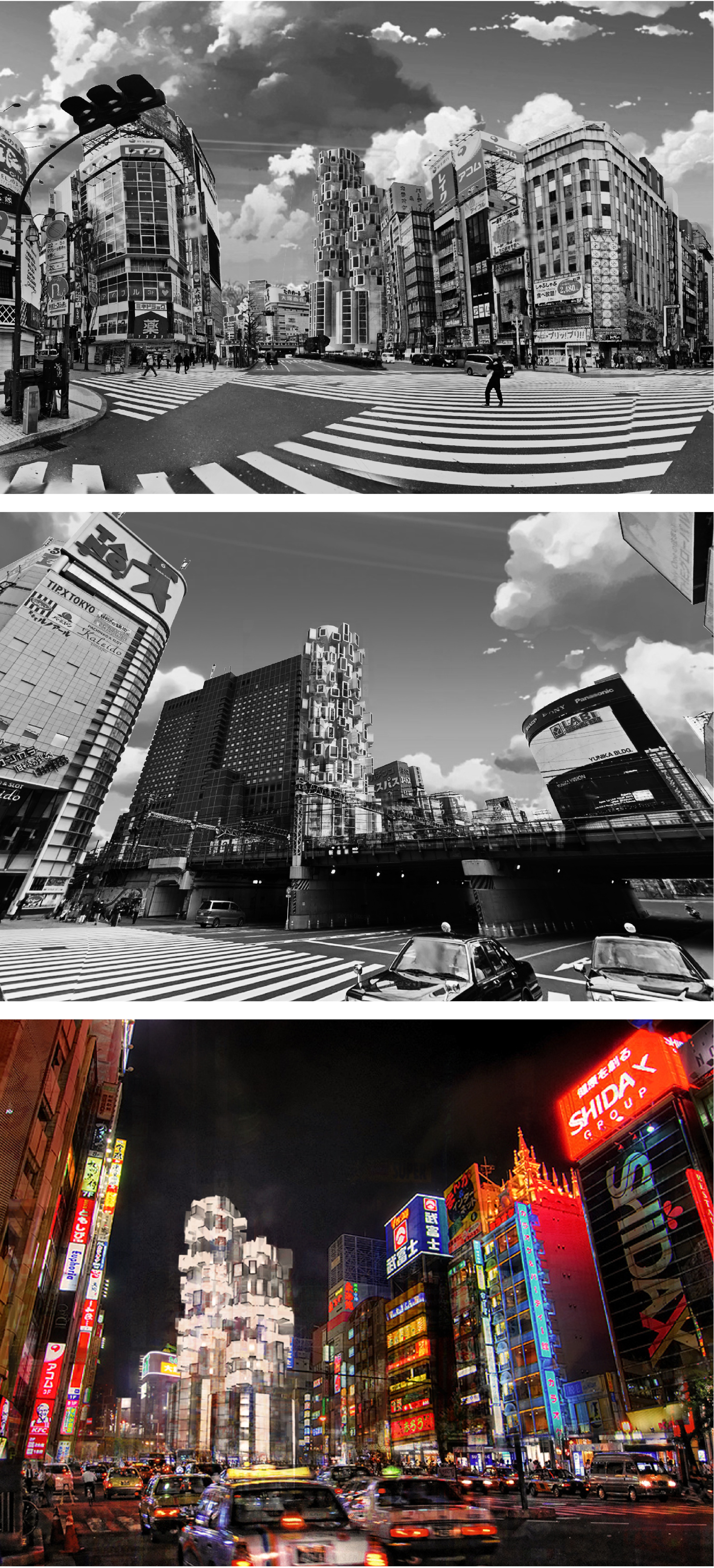
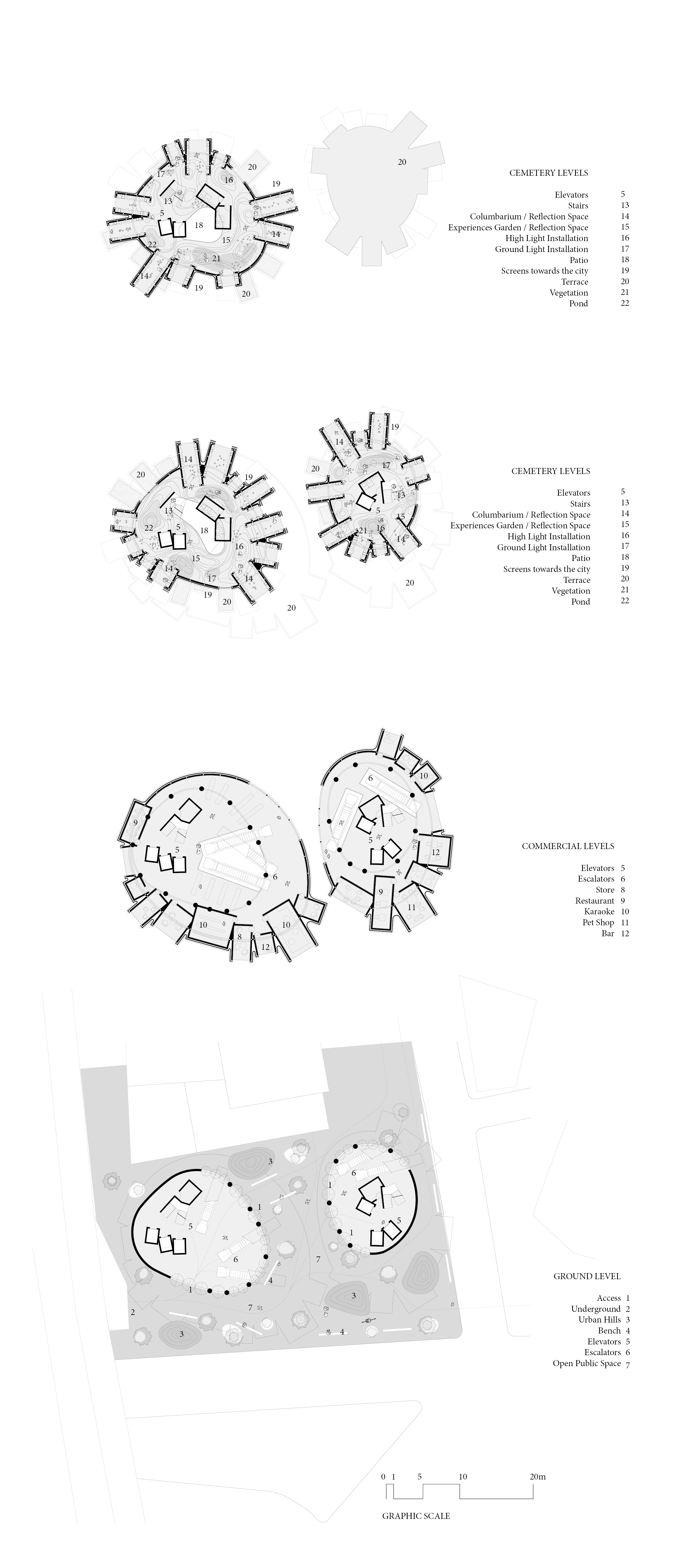
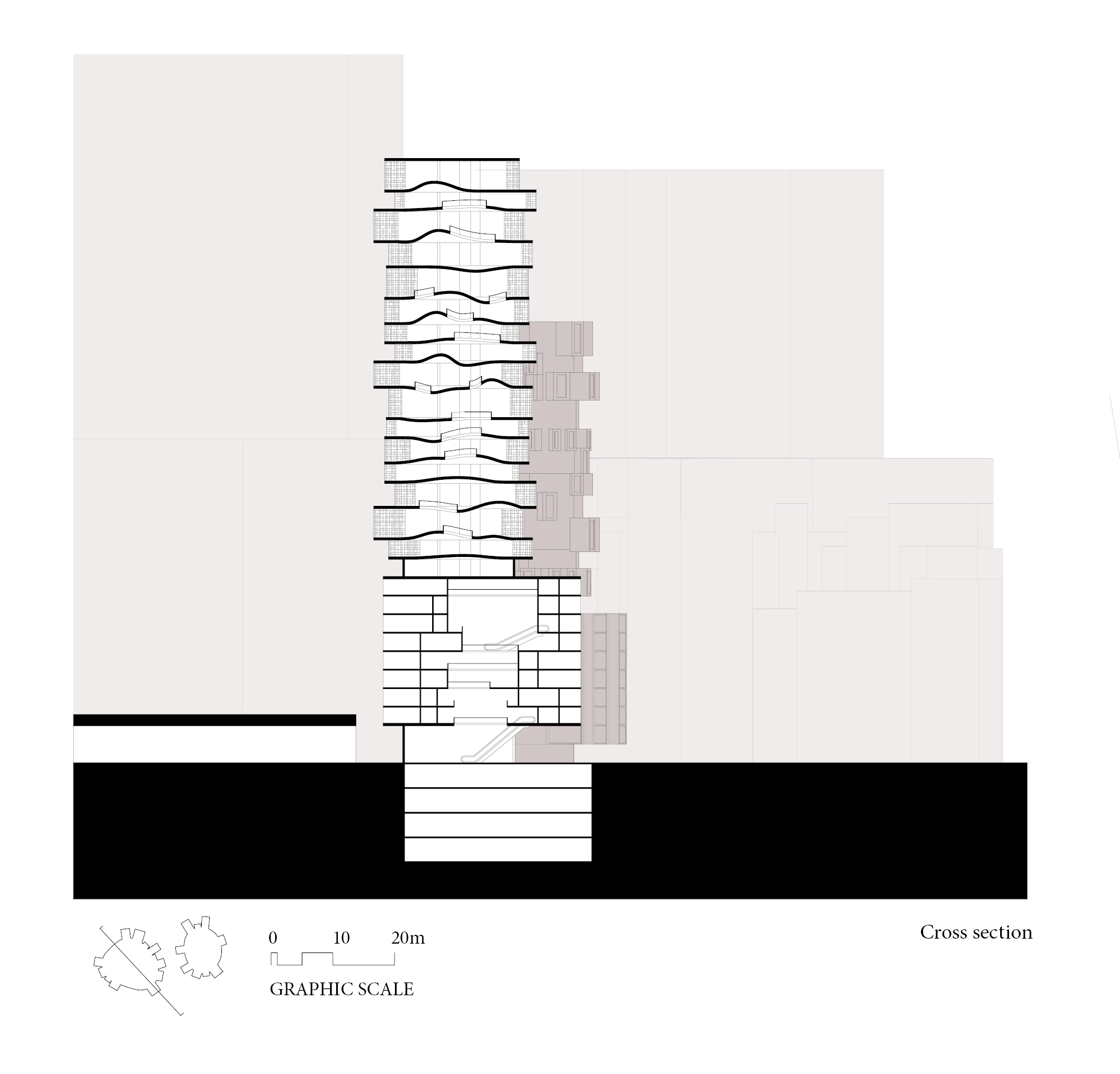
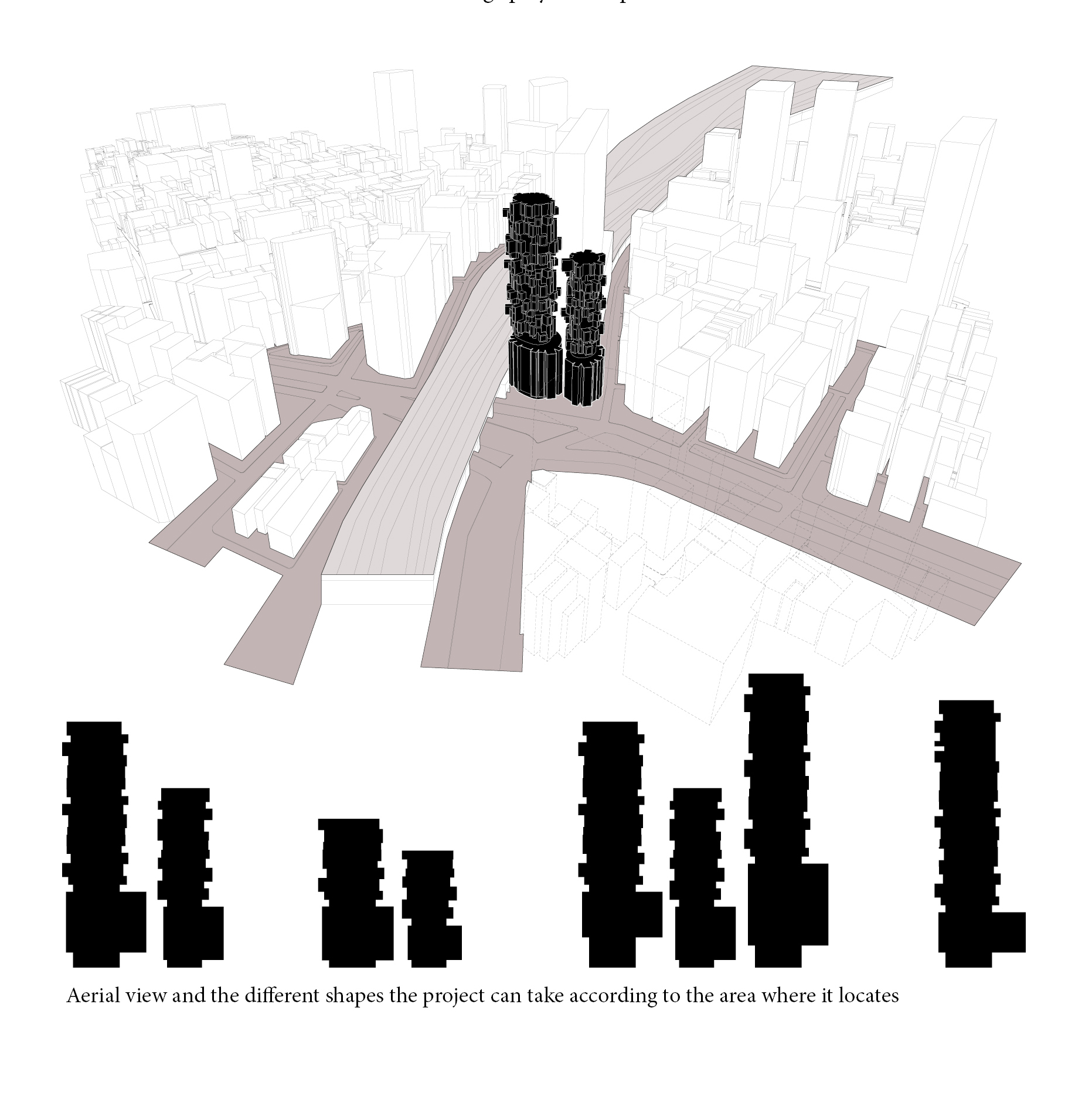
The project proposes a network of mixed‐use towers. According to the available area, each vertical cemetery will have one, two or more towers and their heights will also be different. Each tower has a ground level that creates an open public space. The next body is for commercial uses and the main upper volume gathers the cemetery. The columbarium spaces surround a garden with concrete hills and vegetation, filled with light installations to allow the reflection. The façade is covered with screens to project images from the deceased’s lives. This is a place to celebrate and remember life.
Death concept evolution towards the naturalization
Traditionally, certain adjectives have been associated to the cemeteries. Inside this vocabulary we ca find word such as peaceful, quiet, silence, contemplation, nature or loneliness. All these words can be grouped within other concept, the distance or remoteness. Cemeteries, apart from the obvious hygienic reasons, which made sense decades ago, are forced to be as far as possible from the people’s sight, the better.
From this point of view a contradiction is formed, between ‘built’ (in a sense of processed by humanity) versus ‘nature’ (not touched by the human beings, what is not the city). This paradoxically relates to the other contradiction city vs cemetery or life vs death. Obviously today it is not strange to find cemeteries inside the cities, but not for a different conception towards death, but because of the urban growth that surrounds the cemeteries, apart from the practical and logistic questions which help having a cemetery in the city.
I think this ideas association has to change. Death is part of life and human nature and therefore has to be part of it, being present where life develops. Urban life develops within the city. cities are built, but are also nature. Cemeteries must reflect that complex reality around death, in which each of us has a certain way of expressing and living it.
Infinity of actions are taken place in the city, many of them in simultaneous places. Through history there have been conflicts because of those simultaneities, but the social and cultural processes have made them possible. In the case of the cemeteries, we are able to take the actions to combine the places where our families lie with the other urban activities. It is about mixing and doing compatible the activities that were not traditionally connected, from an unbiased point of view.
Today’s cemeteries, a space issue? or is it cultural?
Changing the paradigm about death helps to issue the space problem in high dense cities. In these cities the uses and traditions have adapted to the need of space. Accommodation of mortal remains has to deal with this adaptation, too. Not because of a spatial problem, but for the evolution of the cemetery concept itself.
Sometimes they look like model cities, with streets and squares. Other times they look like huge containers as open air supermarkets, or vast parks made to contemplate. But there is always a separation (physical or psychological) with ‘real life’. They produce discomfort, aren’t pleasant, create taboos where they are placed. Everything around them seem to be silenced. They don’t exist. The message looks clear, death doesn’t exist, or at least, we don’t want to be told.
The problem with meigi-gashi explains this phenomenon. Cemeteries are not welcomed to the public sight. But, which cemetery? What is what we don’t want to see? The concept of death itself, being surrounded by death. Here cemeteries represent negative concepts.
The solution doesn’t stay on putting distance or hiding them, but giving to cemeteries new inclusive and compatible concepts with urban life. Neither is exalting death, but naturalizing and normalizing it. From hiding/sacralisation to exaltation/trivialization there is a wide range of action.
If we are used to storefronts full of products and commercial signs on the façades, why not storefronts and façades with images from our beloved ones? It is about the recovery of the public space by the citizens, not the just the buyers.
First steps to the proposal
Some issues are highlighted:
- Normalization through visibility, which means doing the cemeteries present, without the need of a direct sight of the columbariums.
- Easy access to make the visits more frequent. Placing the vertical cemeteries at well communicated areas, like transport hubs or commercial zones.
- Possibility of having an intimate time with the deceased. Offering spaces suitable for lonely reflection and/or open interaction.
- Pay homage to the deceased to be remembered and still present, through the images of them and their relatives and friends.
- Use of today tech tools to get to the objectives.
- Compatibility with other urban uses. The cemetery doesn’t have to be alone at a place. It can interact around other activities.
Program and transmedia identity
Nowadays we own a physical and a digital identity, which lead to the transmedia identity. Through the digital identity we can stay over our physical existence.
The project proposes the installation of screens on the façades to show pictures or messages sent by the families and friends. From the street everyone will see the people from the cemetery. At the columbarium, more information can be read or added.
A garden of experiences is the center of every level. Those experiences can take the form of a light installation or a furniture, it changes through time. The internet of things plays an important role here.